
The front line in Ukraine stretches for over 1,000 kilometres. There is fierce fighting everywhere. The fighting continues unabated even in winter. Not far away, organic farms are continuing to farm. bioPress was able to interview two of those directly affected.
bioPress-interview with Kozak-Organic and Organic Greenhouse; January 2024 issue
Oleksandr Orekhin's Kozak-Organic farm is occupied by the Russian army. He is now setting up a new farm in the Dnipro region. "Many thanks to all our organic partners from Switzerland and Germany who are supporting us in this situation. A very personal thank you goes to Stefan Dreesmann!", emphasises Orekhin emphatically.
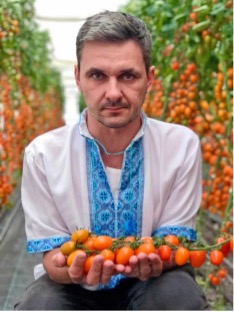
bioPress: Mr Orekhin, how has the Russian war of aggression affected you and your company?
Oleksandr Orekhin: The Russian army was already about 120 kilometres away from us when we were attacked in 2014. My family was scared, but thanks to the Ukrainian defence, the Russian attack was unable to reach us.
Our situation changed in 2022. On 28 February, our organic farm was temporarily occupied. My mother therefore went to Zaporizhia, a Ukrainian-controlled frontline town. My wife and our four-year-old son moved to Ivano-Frankivsk in western Ukraine, close to Romania, Hungary and Slovakia. I was on the farm when the attack began. Me and my mechanic destroyed all the tractors and combine harvesters, even the new grain drills and lorries - because we knew that the Russian army was stealing or destroying all the well-known brands of agricultural equipment, and I'm a Massey Ferguson fan.
bioPress: And afterwards? What are the biggest practical challenges today?
Orekhin: I later left my farm, because as the owner I was particularly at risk. My farm mechanic still works on the farm, but more as a guard. Unfortunately, the situation is too unsafe to manage our organic fields and greenhouses. We had cultivated 100 hectares, which were destroyed. However, we hope that 2023 will be the last year without a Ukrainian harvest.
If we can return to the fields, the 'only' difficulty will be finding enough lorries to transport away all the waste from the fighting. It will be very difficult to demine fields and forests near the fields.
bioPress: What are the biggest problems in commercialisation?
Orekhin: The Ukrainian market is difficult. Many people who buy organic products have left Ukraine. Other people in Ukraine have lost all or part of their income. Exporting via the Black Sea is very difficult because we have lost the seaports and our grain does not want to be seen in the European Union at the moment.
bioPress: What support do you need most at the moment?
Orekhin: I personally and my company Kozak-Organic are starting from scratch. In autumn 2023, I found untouched land in the Dnipropetrovsk region and hope to start growing cereals and vegetables in 2024. I am currently looking for money to buy a tractor and some cultivators and seeders. Maybe I can find someone who can give me a tractor with equipment for one per cent credit. We are a very industrious people. We have to restore what we have lost and continue to work for the reconstruction of Ukraine.
bioPress: What are your prospects - after the hopefully victorious end of the war?
Orekhin: For a new beginning, the war must end. The whole of Ukraine is praying and fighting. But I hope that this will happen very soon, and then I will grow organic vegetables and cereals for our Ukrainian children.
Organic Greenhouse is located south of Kharkiv, around 15 kilometres from the front line. The farm was not directly damaged by the war. Nevertheless, the impact on cultivation and marketing is significant. Viktor Styfura is the director of the farm.
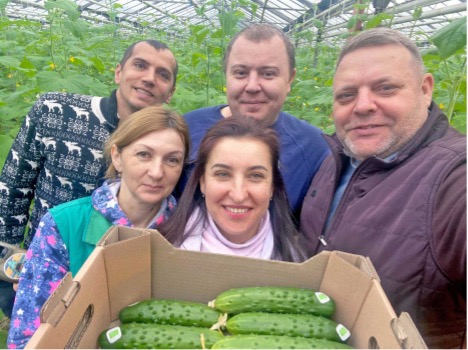
bioPress: Mr Styfura, how did the Russian war of aggression affect you and your company?
Viktor Styfura: The war has severely affected our product marketing. We haven't sold our organic cucumbers for almost three months. This period coincided with the hottest and most profitable period for our greenhouse. We were able to sell our products in Kiev and Kharkiv, but overall there were major product losses and therefore a loss of income.
bioPress: What is the situation like today? What are the biggest practical challenges?
Styfura: We only sell our products on the domestic market. The demand for organic products has fallen sharply. Unfortunately, people can't get rich in the third year of the war, they just get poorer and choose what they can afford. And organic products are not cheap.
bioPress: What are your prospects - after the hopefully victorious end of the war?
Styfura: We will increase the volume of production and sales and try to cover the entire Ukrainian market so that every city has our products. And we will try to export abroad. We expect an increase in demand, because when all the horror is over, people will return and our country's economy will recover.
Іnterview: Peter Jossi
The interview contacts were arranged by Dr Stefan Dreesmann, project manager of the 'German-Ukrainian Cooperation in Organic Agriculture' (COA Ukraine). The project is in contact with many organic farms in Ukraine through professional activities and aid campaigns. Homepage:
http://www.coa-ukraine.com/en
Appeal for donations
'Permaculture in Ukraine' is asking the international community for support in winter:
"Already on the second day of the war, our organisation teamed up with the NGO 'Global Ecovillage Network of Ukraine' and created a map of shelters for people who have fled the war or lost their homes. Many refugees are now living in our ecological communities. We have renovated houses, grown food, organised permaculture training and children's camps. But another winter is here and there are still many needs. Most needed are donations for firewood, farming tools and water catchment basins.
You can send the money with the keyword 'Winterhelp' to the Paypal account of the director Anastasiya Volkova: This email address is being protected from spambots. You need JavaScript enabled to view it.."
Further information: http://www.genukraine.com.ua